Categories
Foosball

Maintain your foosball table with these easy steps

Summary: Learn how to properly care for and maintain your foosball table and other related equipment.
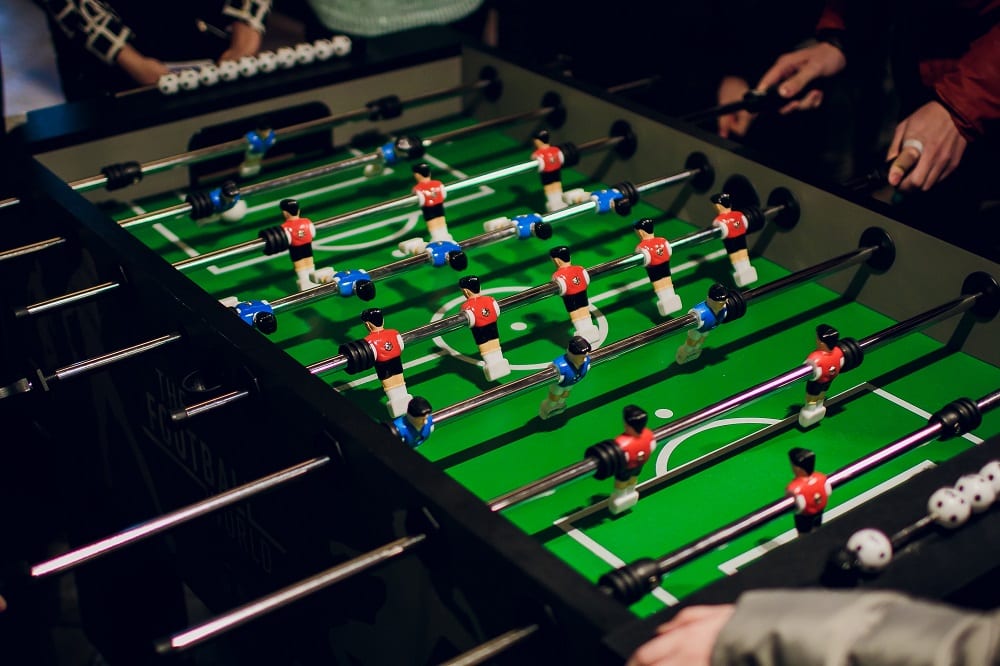
Maintain your foosball table Dirt, debris, black ball marks and spilled drinks can really mess up a good foosball game, that’s why you shouldn’t neglect foosball table maintenance. Cleaning your foosball table and maintaining the individual parts protects your investment and keeps you playing a good, fast-paced game!

The rules governing cleaning your foosball table are conveniently similar to what you would do when cleaning an antique item or piece of furniture. Let’s consider some easy ways to maintain your foosball table.

  • Surface of table

  • Rods maintenance

  • Cleaning the foosballs

  • Cleaning & aligning players

  • Addressing other parts

How often you clean your foosball table often depends on how much you use it. During heavy usage, it’s recommended to clean your table once a week and at least once every month during low to moderate usage. And while many companies sell specialized foosball table maintenance and care products, the following maintenance tips can be found around the house or at a local home improvement store.

Surface of Table

To clean the surface, use a can of compressed air to blow the dust in hard to reach places. When the compressed air reaches into the crannies and nooks, the overall smoothness of your gameplay will be top-notch.

This next method of cleaning is arguably the easiest for your foosball table maintenance. Make sure that you wipe the table with a clean, dry cloth. Doing this will remove any of the loose dirt and debris from the foosball table.

Next, put a light amount of rubbing alcohol (70 to 90 percent) on the cloth and wipe the top surface down. The alcohol will not harm your table surface and it will evaporate quickly if used sparingly. Keep in mind that you may need to apply multiple coats on stubborn black stains.

NOTE: Never use water to clean the surface of the foosball table. This might cause the surface to wrap from getting wet.

Related article(s): Table Cleaning & Maintenance

Rod Maintenance

After the surface of your foosball table is clean, you will need to take a separate cloth or cotton rag and apply a small amount of foosball silicone to the rods of your table. Rusty rods will be slower to navigate with, decreasing your reaction time and reducing your performance. Under-maintained and under-performing rods will also likely carry dust and rust which, in a cosmetic sense, won’t appear attractive (nobody likes playing on a rusty, decrepit-looking foosball table). Plus, that squeaky sound you’ve been hearing during each game? — it disappears after cleaning and lubricating the rods.

NOTE: Do not use WD-40 on your rods! This will make your rods slick and move faster for a short period of time but will dry out your bumpers and bearings and make your table wear down faster over time.

Use rubbing alcohol and a piece of clean cotton or cloth rug. After dipping the clean cloth into the rubbing alcohol, wipe down the surface of the rods gently until they’re clean.

The foosball table’s rods need to move and turn smoothly and the only way to ensure that the rods are clean and lubricated is by using silicone on the rods and bearings.

Related article(s): How To Clean And Lube Rusty Foosball Rods (Complete Guide)

Cleaning the Foosballs

The benefit you gain by cleaning the foosballs is that it improves performance and the functionality of the game table. No one likes sticky foosballs! The game becomes more enjoyable because the foosballs move around quickly as the player intends them to.

When left with dirt for a long time, the foosballs can develop complications when being used, such as being slow and moving in odd directions that weren’t intended. Here are  some different techniques you could use:

  • Using a piece of dry cotton cloth, dip the cloth into rubbing alcohol. The wet cloth should be used to gently clean the foosball table balls until they are clean from dirt and sticky stuff.

  • Using some mild dish detergent and a soft scouring pad, gently wash the foosballs with the scouring pad and detergent to remove any black marks or dirt residue.

Tip: To maintain the white color for a period of time, put them in a pair of white tennis socks and run them through the washing machine cycle while doing your whites.

Related article(s): Foosball Maintenance & Care

Cleaning & Aligning Players

Your playing men can also be cleaned with rubbing alcohol to remove any scuff marks or debris; ensure you use a clean cotton cloth. Examine the players for loose screws and tighten them.

If you have other parts that need changing, ensure that they are changed during your cleaning time or as needed, so as to have a well-maintained foosball table for playing.

The players will also likely need to be realigned. This isn’t something people think about often, but the truth is that the rod players should be checked after every table cleaning. When aligning the players,  remember that the players face the opponent’s goal. Regular adjustments help to prevent the players from breaking or splintering and also improve the quality of each game play.

Addressing Other Parts

Since foosball tables often experience a lot of wear and tear, pieces and parts are prone to chip, get broken, or peel. Imagine playing a solid game of foosball when of the players “legs” breaks off and flies across the table! Having loose parts on your foosball table is a definite no-no.

If you notice that a part breaks off, they must be glued down as soon as they occur to ensure the surface of your foosball table is maintained. Commercial superglue can be used immediately to glue the part back on. If you wait too long, the part may not fit as perfectly and playing with broken parts will likely damage the foosball table even more. Of course, there’s always the option to purchase new parts and replace them entirely.

For the glue, there are many good types on the market, so choose the one you have confidence in to do this job. Remember to avoid glue spilling on the playing surface — this won’t only be hard to remove but it could also damage the surface if you do try to remove it! This requires patience and other preventative measures such as keeping a cloth beneath the area you’re addressing so the glue spills doesn’t get on the surface.

Related article(s): Foosball Table Maintenance
Categories
Pool

Pool table repair and maintenance: Where to go and how to DIY

Summary: Learn how you can repair and maintain your pool table for years of durability.

Pool table repair and maintenanceSince 1984, Games For Fun has been offering full service pool table repair and maintenance services to homeowners in Southern California. While we repair pool tables, we also want to make sure that you know how to maintain your pool table so you can preserve it for as long as possible.

A clean pool table will last longer and play better than one that is neglected, and simple maintenance is one of the best ways to protect your investment. But maintaining your pool table is more than simply putting the table cover over when you’re not using it.

While covering your pool table is an important measure, pool table repair and maintenance are also necessary. We’ll be discussing how to care for the following areas on your pool table:

  • Wood

  • Cloth/Felt

  • Pockets

  • Balls

  • Additional preventative measures

Most of the steps in pool table maintenance are simple and don’t need to be done regularly for the table to remain in great shape. The goal is for your great-grandchildren to enjoy billiards on the same table you did!

Polishing the wooden parts of your pool table (cabinets, rails, and more)

Knowing how to clean a pool table is important and not difficult to learn. The wooden supporting structure can be maintained like any other piece of fine furniture. Any visible dirt or spills should be wiped off immediately with a clean, barely damp cloth.

For the cabinet and rails of the table, regular household wood cleaners and waxes should work fine… it is a piece of furniture, after all. Use common sense (don’t use wood products on leather and vice versa).

Dust when necessary and use wood polish if it looks really dirty and needs some extra scrubbing. Polish the wood with a citrus-based polish. The frequency with which you need to do this will vary depending on how heavily used the table is. Always follow the label directions for the polish that you choose.

Brushing or vacuuming the cloth/felt

Cleaning the wooden components of your table is easy, but a little more time is required to learn how to clean pool table felt. The surface of the table becomes soiled with dirt, dust, and chalk over time and all of this is ground into the felt by the pressure of the balls.

For the typical recreational pool player, the table should be brushed and vacuumed at least once a week. The more you play, the more often you should clean the table. Soiled felt is not only unattractive, but the dirt can cause the balls to roll in unexpected ways and can even wear away their surfaces.

Using A Vacuum

Some argue that using a brush for regular table cleaning is ineffective since the brush will simply push dirt and chalk dust further into the cloth fibers, causing them to deteriorate quicker.

Whether you decide to use a vacuum or a brush is up to you. However, for those who prefer vacuuming their felt, it’s recommended to use a low powered vacuum for regular cleaning.

Using A Brush

When you purchase a pool table, it should come with a brush that is used for treating the table’s felt. For those who opt for the brush, it’s very important that you brush the felt to ensure that all dust and stray fibers are removed from the table, this process is called “training”. This is one of the only steps in pool table maintenance that needs to be done regularly for optimum playing results.

Training ensures that the felt is setting correctly and that the balls have a smooth surface to roll over.

You can buy brushes that are made just for this purpose from businesses that supply pool tables. Some sporting goods stores may also carry them. The critical feature of these brushes is that the tips of the bristles are soft, so they will not damage or tear the felt. Always brush with straight, not circular, strokes. Make two passes over the table:

  1. Begin in the center and brush out to the edges, then begin at one end and work towards the other end. Use light strokes to avoid stretching the cloth.

  1. Vacuum the felt. Use a vacuum cleaner with light suction that has an upholstery tool and a crevice tool. Vacuum the main expanse of the table with the upholstery tool to pull out all the remaining dirt and chalk, and then use the crevice tool to clean under the rails. Lastly, vacuum the pockets to remove any debris that has collected there.

  1. Any liquids that are spilled on the felt should be cleaned immediately. Use a clean damp cloth to blot, not rub, the stain. Once the stain has been absorbed, use a dry cloth to blot any remaining dampness out of the felt.

For more stubborn stains, or for occasional deep cleaning, you can use a product that is specifically made to clean pool tables. This is typically a foam cleaner that you spray on the table and allow to dry. Follow the label instructions for the best results.

If you don’t want to replace the felt, try to keep all pets off the table as much as possible.

TIP: When chalking cues, keep the tip and the chalk away from the cloth. Chalk dust is fine and abrasive, so the less you chalk, and the farther from the table you do it, the less likely it is to affect your pool table cloth.

Should you use a leather conditioner to clean the pockets?

For the table’s side pockets, you can use leather conditioner ONLY on the outside if it’s needed. You shouldn’t need to do this very often, unless the condition of the room it is being used in is not ideal (if it’s outside, if the room is unfinished, etc.). Do not apply any to the inside of the pockets; this can affect the pool balls when they are at play.

Using a mix of warm water and soap to keep the balls free from dust and dirt

When you are performing routine maintenance on your pool table, you should take a few minutes to wipe the balls. Wiping them with a cloth dampened with warm water will be enough for a quick cleaning, but occasionally give them a more thorough wash. You can also add soap to the warm water.

Keeping the ball set free from dust and dirt will not only make them play better and more consistently, but will also help keep these particulars from sullying the table. Be sure to check out the market for specialty products that will remove oils and other types of dirt that cannot be cleaned away by soap and water alone.

Additional preventative measures (pets, designated spots for “damaging” items, and investing in a cover)

Keep the furry friends away. Specific areas/parts of your pool table such as the felt, it’s legs, and the pockets are at risk if you have a pet. Your furry friend might decide to make a good scratching post! Our best suggestion would be to keep all pets away from your table if they are not fully trained — both in your best interest and that of your table.

Avoid soiling and spills. This is an important step in extending the life of your table. Keep drinks and cigarettes/cigars away from your pool table. Accidents happen, but the further away from your table a spill takes place, the less likely you are to have any damage or staining to your cloth. Shelves, tables, and ashtrays are convenient (and literal table savers) for when you have guests, their drinks, and other “damaging” items.

Invest in a cover. For the times you are not using your table, a cover protects the surface against dust and damage and prevents sunlight from fading the cloth.

When you are playing, have a rule that there is no eating or drinking at the table. Provide a small table to the side for drinks and dishes.

Related article(s): Pool Table Maintenance 101, How To Clean And Protect Your Pool Table, and How To Maintain Your Pool Table Felt

Pool table repair, maintenance, accessories, and more

Sometimes, maintenance might not be the answer. If you simply are in need of pool table repair or more parts or accessories, it might be best to find a reputable business that specializes in pool table goods.

Perhaps you need a leader in the Billiard & Home Game Room Products industry since 1984.

No matter what your situation, we’ve got what you need to complete your pool table set up and have your table looking like new.

Be sure to browse our full selection of pool table replacement parts, accessories, and supplies here!

Categories
Pool Uncategorized

U.S. restrictions and curfews: Going to pool halls & staying safe

Covid-19 restrictions and curfewsWith pool halls opening up, learn more about how different states are addressing the recent Covid-19 restrictions and curfews.

As vaccinations continue to roll out, restrictions and curfews from the pandemic continue to be lifted including being able to go to pool halls.

For example, Maryland’s Gov. Lawrence J. Hogan Jr. eased restrictions on business activity and social gatherings. Hogan removed limits on retail businesses, religious facilities, casinos, fitness centers, hair and nail salons, and indoor recreational establishments — including bingo halls, bowling alleys, skating rinks and — you guessed it — pool halls.

Here are some things we’ll consider in this article regarding the reopening pool halls:

  • Why people still love pool halls

  • Extended closing time for venues; communities slowly edging toward a semblance of normalcy

  • Ways to stay safe playing pool as restrictions lift

Keep in mind that some governors have lifted restrictions with mask orders and distancing requirements still in place, per the request of professional health experts.

People still love pool halls, with or without a pandemic

The pandemic hasn’t left, yet pool devotees are excited to check out pool halls that have recently reopened around the country. In fact, one publisher reminisces on his childhood and the beginning of his appreciation for pool in a somewhat prosaic perspective:

The pouring out of loud jolly talk and laughter, but most of all the hard clicks of cue balls breaking the racks, […] and the lighter clicks of wooden scoring beads, as men I could not see slid them along strung wires above the green felt-covered slate pool tables in that magic room above.

FULL ARTICLE: WHY I LOVE POOL HALLS

How states around the country are handling the lifted restrictions and curfews on pool halls

In New York, pool players head back to the halls as restrictions loosen. “I was lost, missing this place forever,” said Greg Bombard, an avid pool player from Halfmoon. For months, the pool hall has been closed to the public and its owners, awaiting an OK from the state to resume operation.

Read the full article here.

In Kentucky communities slowly edge toward a semblance of normalcy in 2021. Billiards play in Owensboro is bouncing back even though the COVID-19 pandemic left a mark.

“It drastically impacted billiards play in Owensboro and across the country.” said Quentin Spooner, who has been league operator of the Owensboro American Poolplayers Association (APA) for 14 years. “Billiards is an indoor sport that is primarily played in smaller establishments, which have faced multiple restrictions over the past year.”

Nonetheless, Spooner says with optimism that billiards play is on the rebound. The vast majority of players in Owensboro are still learning the game — and, more than anything else, they play because they like it.

Staying safe while playing pool during Covid

Sanitizing Pool Balls (Manufacturer Recommended Cleaning Process) & Rails

Clean pool balls are always preferred but shiny and pristine is not necessarily the same thing as sterile. It used to be that we just cleaned our dirty balls so they played better and more consistently but now we have a higher bar to reach. We actually weren’t sure what the best way was to disinfect billiard balls, so we reached out to our friends at Aramith. Here is what Yves Bilquin, COO of Saluc recommends:

“To disinfect the Aramith balls, we recommend the use of alcohol (min. 65%), and then it is important to apply the Aramith ball cleaner to recover regular surface properties. The use of bleach is not recommended.”

Also, wipe down rails frequently. You’ll probably be touching the rails more than any other part of the pool table. Keep it as clean as possible.

Bring Some Gloves for Racking

If you don’t have alcohol/ball cleaner available just use some gloves for wearing while you rack the balls. Bring your own pair of work gloves, or some other thin, dexterous glove, like the kind billiard referees use when they need to rack. You don’t know who’s been handling those balls before you!

Practice Playing With Masks Before a Competitive Match

Speaking of communication, masks are a great form of non-verbal communication. They show that you care about the people around you, and that you appreciate some social distance. Come to think of it, they really help with your poker face.

Wearing a mask is one of the best ways to protect yourself and others from germs, but I’m not gonna lie: they take some getting used to. If you’re not in the habit of wearing masks, try them on, and maybe run a few racks at home or while warming up. It’s weird at first, but you soon get used to it.

BYO- Bring Your Own Items/Equipment

The chalk and bridges at a pool hall are being touched by everyone, they’re strongholds for germs even on a good day. There’s never been a better time to own your very own chalk. Fortunately we’ve got you covered, with a wide selection of pool table chalk. Hold onto your chalk with a pocket chalker. Some chalkers attach your chalk cube to a stylus that goes in your pocket, others go in a magnetic holder, which grabs onto a clip in your pocket. With a chalker, you’ll know where your chalk is at all times, which means you’ll always know where it’s been.

Bridges? Where to begin… at PoolDawg.com, we carry a broad array of billiard bridges. We’ve got everything from bridge-heads that fit on your cue, to retractable bridge sticks that fit into any accessory pocket, to large, dedicated two-piece bridge sticks. Whatever kind of bridge you choose, a bridge of your own means one less accessory you’ll have to share with everyone else.

Use Your Stick As A Guide For Social Distancing

Most health guidelines recommend keeping about eight feet apart to stay safe. Fortunately for pool players, the game has given us an excellent ruler to measure this distance. A typical pool cue is about 58 inches long, just under five feet. If you hold out your pool cue at arm’s length, you’ll get an excellent sense of how far apart people should be. Be careful not to get chalk on someone, though!

FULL ARTICLE: 10 TIPS FOR POOL PLAYERS TO PREVENT SPREADING COVID-19

Categories
Uncategorized

How responsible is technology for the changing gaming industry?

changing-gaming-industryTechnological advancements continue to change the gaming industry each decade… how will the future of gaming be affected?

The gaming industry continues to change as present online gaming expands more than ever, inevitably affecting in-person gaming.

Since its commercial birth in the 1950s as a technological oddity at a science fair, gaming has blossomed into one of the most profitable entertainment industries in the world.

The mobile technology boom in recent years has revolutionized the industry and opened the doors to a new generation of gamers. Indeed, gaming has become so integrated with modern popular culture that now even grandmas know what Angry Birds is, and more than 42 percent of Americans are gamers and four out of five U.S. households have a console.

So, let’s consider 2 specific aspects of the gaming industry that have changed over the decades:

  1. The transition from halls to arcades to at-home game rooms to online & mobile gaming

  2. How to handle the changing future of at-home games

Today, video games make up a $100 billion global industry, and nearly two-thirds of American homes have household members who play video games regularly. What changed from the early American billiard/pool hall days to the current mobile gaming industry?

What happened to billiard/pool halls? “A game of billiards requires a great deal of patience and practice.”

On one forum, the original poster comments, “Seems like [billiard/pool halls] are dying off. Seems like the actual good halls with real tables are going the way of the dinosaur.”

The implication is that the commenter believes that billiard halls are dwindling down. And, after paying homage to a popular billiard hall that was once frequented, the commenter finishes the post by unambiguously holding brands like Xbox, Snapchat, and the good ole’ “bookface” responsible for the riddance of game halls.

However, the reality is that billiard halls have been around for decades, and so have video games. From arcade systems to home consoles to handheld consoles and, most recently, mobile devices, gaming has had its fair share of makeovers, so to speak. The changed generation might have a big role to play in this.

According to an article published by The Circuit, Millennials (also referred to in the article as “The Microwave Generation”) is a generation that thrives on instant gratification. Children and young adults yearn for immediacy at the touch of a button and everything is just a click away.

Millennials are born and bred into a generation of rapid receipt of information and entertainment; it’s hard not to blame them. This thought process is created with a more connected environment. Children hold and navigate iPhones before they can read the alphabet, immediately weaving new relationships between them and the efficiency of an industrialized, technological world.

The reality is that these connections are the only form of communication that today’s adolescents have been exposed to.

One commentor put it simply: Seems there is just no interest in pool anymore. And this is especially true when it comes to playing a game of billiards that is said to require “a great deal of patience and practice.” Realistically, in a generation that thrives on instant gratification, drawn-out games such as billiards simply don’t fit the norm for the younger generations.

The solution (as one commentor writes): Get with the times… download the Billiard App on your phone.

RELATED ARTICLE: THE HISTORY OF POOL: WHO, HOW, WHERE, AND…BILLIARDS?

Home gaming: “Arcades used to be on every street corner. Now we’re lucky if we can even find one.”

Everyone who grew up in the 80s or 90s has fond memories of visiting the local arcade and wasting quarters on classics like Rampage and Street Fighter. Nothing could beat the environment of an arcade — the hypnotic sounds of pinball machines, chiptune music, and laughing kids as you tried to beat the next level of Dig Dug.

The truth is that people loved arcade games so much that they wanted to take them home. As a result, developers made the wise decision to capitalize off of this need. The introduction of consoles lead to the rapid decline of arcades.

It took years to port an arcade game to a console in the 80s, and developers didn’t have the technology to create an accurate rendition. Things changed in the 90s when developers were finally able to create an exact replica of arcade games for consoles.

Once Nintendo ported games like Punch-Out!! and Bubble Bobble to the NES, people didn’t have to go to arcades anymore. As the sales of video games and consoles increased, more arcades began to close.

Read more about how technology changed the arcade scene here.

Too many video games… and a need for change.

The video game boom (caused by Space Invaders) saw a huge number of new companies and consoles pop up, resulting in a period of market saturation.

Too many gaming consoles, and too few interesting, engaging new games to play on them, eventually led to the 1983 North American video games crash, which saw huge losses, and truckloads of unpopular, poor-quality titles buried in the desert just to get rid of them. The gaming industry was in need of a change.

Real advances in “online” gaming wouldn’t take place until the release of 4th generation 16-bit-era consoles in the early 1990s, after the Internet as we know it became part of the public domain in 1993. In 1995 Nintendo released Satellaview, a satellite modem peripheral for Nintendo’s Super Famicom console.

The technology allowed users to download games, news and cheats hints directly to their console using satellites. Broadcasts continued until 2000, but the technology never made it out of Japan to the global market.

Mobile Gaming: “Another rapid evolution that has changed not only the way people play games.”

Perhaps the most interesting change in the video game industry is the expanding demographics of gamers. Since smartphones and app stores hit the market in 2007,  gaming has undergone yet another rapid evolution that has changed not only the way people play games, but also brought gaming into the mainstream pop culture in a way never before seen.

Rapid developments in mobile technology have created an explosion of mobile gaming. With more people playing games, creating demand for more immersive entertainment, and looking for easier ways to access games, the future of the video game industry looks bright.

RELATED ARTICLE: HISTORY OF GAMING: AN EVOLVING COMMUNITY

Be sure to check out other related articles on this topic below:

Categories
Air Hockey

A beginner-friendly guide to all things air hockey: Invention, how it’s made, pro-tips and where to buy a rad air hockey table

What’s the deal with air hockey? We feel like it’s kind of an underdog when it comes to game tables. People go straight to pool or foosball — not that there’s anything wrong with those (we love them). But we feel like air hockey could use a little more love these days. So we’re showing that love by addressing some cool things about the game.

  1. A brief history of air hockey: Who invented it and where

  2. How are air hockey tables made (basically, what’s with the air?)

  3. Tips on winning the game + where to buy air hockey tables

Our guide to providing with the basics about air hockey knowledge is finally here. The objective: For you to knock the air out of your friends the next time this conversation comes up! (If “air hockey” talk doesn’t come up, we trust that you’ll figure out a way to make it happen.)

The history of air hockey: Who invented it and where it was invented

Air hockey tables are a relatively recent invention when compared to other game tables like pool tables and shuffle boards. In the most basic sense, it’s a delightful amalgamation of billiards and ice hockey. 

In 1969, three men — Phil Crossman, Bob Kenrick, and Brad Baldwin — were all employees of Brunswick Billiards, a maker of pool tables. A fourth man, an ice-hockey enthusiast named Bob Lemieux, is also credited for inventing the game. 

With Brunswick’s backing, thousands of tables were made and installed in arcades, pizza parlors, community-center basements—anywhere with a stretch of faux-wood panelling and a proximate crew of wan, beanpole kids.

The game caught on quickly and by 1974, the beloved sportscaster Marv Albert was delivering tense play-by-play narration as thirty-one regional champs jockeyed for a cash prize of $5000 and the undeniably radical title of “Best Air Hockey Player in the World” at the sport’s first championship tournament, held in New York City.

However, by the late 1970s, the game’s popularity had peaked due to the increase in technology (i.e. flashy, bleeping arcade games… no hate, only truth). But, we digress. 

Source: The Forgotten Greatness of Air Hockey

How air hockey tables are made, including the famous air pockets

Air hockey tables are fun for everyone. It’s fun, exciting, and easy to play. You’ve likely scuffled around an air hockey table a few times growing up, curious about the lightweight nature of the puck. 

So, how do these tables magically skate pucks across the board? It’s a fairly simple set up that gives air hockey tables their floating qualities. 

Air hockey tables are made of slick (usually plastic) surfaces. This playing field is surrounded by raised edges that prevent the puck from flying off the table. Each air hockey table is drilled symmetrically with tiny holes across the entire surface, creating an even and frictionless playing field. 

The key to creating this effect lies in the smooth surface and evenly blown air that the fan pumps up through the playing board. Underneath the table, a fan blows air through these holes. The air pressure is what keeps the puck floating, making it appear as though the puck is levitating. This is the same principle used in hovercraft technology. 

As a result, opposing players can hit the puck toward the other end of the board without it getting stuck. That’s why the puck usually keeps moving — albeit rather slowly — even if you try to stop it. The reason for this is the small funnels of air being forced up through the floor. (Put your hand to the table and you’ll feel the air coming through.)

Source: How Air Hockey Tables Work 

The fact, though, is that the puck glides too quickly and effortlessly for players to really track it. An early advertisement for the game admits as much: “Puck actually floats on air—travels faster than the eye can follow.” 

What you hope for, instead, is that, in the act of frantically thwacking the puck away from your slot, you might inadvertently score. So that might be an additional reason for the game’s short-lived glory in the ’70s.

How to play air hockey (to win) and where to buy it

Short-lived or not, air hockey is a sport that is fun to play. It requires two players and each objective is to score more points in the opposing player’s goals.

Of course, you’ll need an air hockey table. And, no, you don’t have to break the bank. There are affordable air hockey tables that are in the 3-digits, such as this one and this one, and there are some tables that are on sale

Now, onto the game. While more details to the rules of the game can be read here, the following is the most basic (of the basic) guidelines to how to play: 

  • Starting: For beginners, you can begin the game by starting with the puck in the centre and giving it a good smack!

  • Scoring: For a player to score a point, the puck must land in the opposing player’s goal, and stay there – if it bounces in and out, it doesn’t count! It doesn’t matter whose mallet the puck touched last, so own goals are entirely possible. Within each game, possession of the puck for the next serve passes to the player who was scored upon.

  • Winning: The winner of each game is the first player to accumulate seven points. If you’re playing tournament-style, you’ll also be playing to best-of-seven – so the first person to win 4 games. 

Here are some additional tips to keep in mind when playing: 

  •  You can stand anywhere around the air hockey table on your side of the centerline; don’t stand past the line.
  •  Only one puck can be used at a given moment.
  •  The puck may be struck with any part of the mallet except the bottom surface.
  •  A player has 7 seconds to return a shot that crosses the centerline. The 7 seconds begin as soon as the puck enters and remains on that player’s side of the centerline. Violation results in a foul.
  •  When a player is scored upon, they have 10 seconds to remove the puck from the goal and place it in play. The 10 seconds start as soon as the puck has fallen completely through the goal and is available for the player to place into play. This rule is suspended during the course of a time-out.
  •  Each player may take one time-out per game, no longer than 10 seconds and may exercise their time-out only when the puck is in their possession or not in play.
  •  After each game, players swap sides of the air hockey table.

If you want to learn a more extensive process on how to play air hockey, read here.

 And don’t forget that with an air hockey tables comes care (like anything in life). Be sure to check out our tips on how to maintain your air hockey table!

Categories
Fun

A simple 5-step guideline to creating the perfect game room at home

Learn how to create an awesome game room in the comfort of your home  in just 5 steps

Your childhood memories tell you that Cousin Joe had the best game room out of all the cousins growing up, but the reality is that creating a cool game room like Cousin Joe’s might not be as complicated as it might appear.

The reality is that an unused corner of your garage or living room can easily become a gaming area. Or, if movie nights are more your thing, a portable projector can transform your living room or backyard into an epic home theater. (Don’t forget the popcorn!)

But we don’t want to give too much away without the details, so we’re showing you the easiest guideline to make yourself a game room that even Cousin Joe would enjoy if he were to see it today! 

A game room isn’t cool because of how much space you have or how many games you own. With the right designing mentality and a couple of game room products, you’re on the successful path to an amazing game room in your own home (invite the cousins over… this one is for the books).

1. Consider the size of your current space.

While size matters when establishing a video gaming room, it shouldn’t be the main reason you opt out of creating a game room. Though you have to be mindful of the placement of items such as game room tables, keep in mind that some game rooms are spacious and still lacking, and others are small but mighty in entertainment. 

Like we stated before: There could be a small unused space in your home that you can use. So when we say consider the size of your current space, we don’t mean consider if you can have a game room. We want you to consider what you can do with the space you currently have.

2. Invest in a projector.

Playing a video game on a PC screen or watching a movie on a standard TV may be a little too small for you. You can use a projector to enjoy the game on a larger display screen or create a real theatre ambiance with a projector.

Keep in mind that a projector allows you to customize the range and size anytime as you want, whereas you can’t change the size of a TV screen. All you need for this is a blank wall and a small area to keep the projector. And not all projectors are bulky. Some are mini and others are portable making this an ideal space-saver.

3. Install all the lights.

Believe it or not, lighting is an important aspect of a video gaming room. We’ve talked about this before in a previous article about unique game room ideas, and it doesn’t hurt to emphasize this feature again. 

Even if you live in a box, adding some light strips around the room could tie your entire game room together. And the room doesn’t need to be too bright, but medium-moody lighting will make it look the perfect mix of elegant, hardcore, and entertaining all in one. 

You need to install the light at various or particular parts of the room, based on your preference, but the room needs to be completely dark when using the projector. For a better experience, choose push-button control lighting. 

TIP: The correct way is to install the light on the ceiling and on the back of the screens. This setting enhances the tone of the room, so players can focus on the screens while playing games.

4. Look for multipurpose pieces/multigame tables.

If there’s one investment we definitely say save for, it’ll be a multigame table. If you have space for just one game table, make it count!

The best way to get more from your game room is by investing in pieces that serve multiple purposes, like a cleverly designed pool/tennis table combo! In fact, a pool/tennis game table combo is being generous.

Some companies have a 10-in-1 game table. Consider this awesome game table. It includes foosball, push hockey, ping pong, billiards, and even game boards such as chess.

Honestly, you don’t have to sacrifice space for fun. Multigame tables are affordable, space-friendly, and ideal for creating variety in your game room! These game tables that serve more than one purpose provide excitement and something new for you and your guests.

5. Don’t forget the accessories… affordable and aesthetically pleasing.

Turning your existing room into a video gaming room can be a hard challenge when you try to completely re-style the entire decoration and design. That’s why you shouldn’t focus on restyling the entire room.

You can utilize the existing design of the room and take advantage of simple decorations and accessories that tie everything together. Whether you add a color on the walls or ceiling, hang some drapes or posters, or add a sofa or bean bag, the small things matter. And what’s even better is that these won’t dry out your wallet! 

TIP: Another great option when you’re short on space? Tabletop games! Any room can become a game room with these space-saving finds. Add a small table and have some card games and even jenga to keep the entertainment going. 

A longer list of game room ideas can be viewed here.

The perfect game room is right around the corner…

When it comes to creating the perfect game room, you don’t need to a have a big budget or a big space to do it — all you need is big creativity and a big desire to get that game room you’ve always wanted. 

If your room simply isn’t equipped for a game room, don’t fret! You can utilize your outdoor area like the backyard. In warmer months, an unused corner of a deck or patio can easily act as a recreation area with the help of outdoor-friendly games. You can also take advantage of an unused garage or storage area.

Categories
Pool

Cue chalk talk: Answering your common (and uncommon) pool cue chalk questions

We’re taking time to answer your cue chalk questions, no matter how simple or crazy some might be (and, yes, there are questions about eating chalk).

Consider this article to be the first ultimate hub for all things related to pool chalk. Whether you’re getting into the game of pool or chalkin’ curiosity has simply gotten the best of you, having knowledge about the chalk used in a game of pool (and outside of it) has its benefits. However, chalk is cheap, so let’s just get into it.

What is pool cue chalk made of and how is it made?

Cue tip chalk is not actually the substance typically referred to as “chalk” (generally calcium carbonate), but any of several proprietary compounds, with a silicate base. Cue tip chalk (invented in its modern form by straight rail billiard pro William A. Spinks and chemist William Hoskins in 1897) is made by crushing silica and the abrasive substance corundum or aloxite (aluminum oxide), into a powder. It is combined with dye (originally and most commonly green or blue-green, like traditional billiard cloth, but available today, like the cloth, in many colors) and a binder (glue).

Why is chalk used in pool? Is it necessary?

TL;DR: Chalk is used to provide friction between the cue tip and cue ball during contact, to prevent a miscue; without chalk, the contact point between your pool stick and the cue ball would lack friction. Now, the long version. If you’ve ever watched a game of billiards, you may wonder why the players apply chalk to the end of their cue sticks. You might have applied chalk to the cue stick just from mimicking without even realizing why you’re doing it. Over time, the tip of a pool stick becomes worn and smooth from use; chalk adds ‘motion-resistance’ between the cue and the spot where it hits the cue ball. This prevents the cue from sliding off the ball prematurely, ruining the shot (called a ‘miscue’). Another less-direct advantage to chalking up is that it forces the player to pace him or herself and spend a little extra time focusing and concentrating between shots.

How and when is it recommended to ‘chalk up’?

Though with some newer chalk, your chalking will be drastically less, it’s recommended to chalk before every shot or every other shot. In order to get the most thorough, adequate chalk coverage on your pool cue tip, tilt your cue at an angle and use a deliberate, brushing motion. Slowly turn the cue stick while keeping the chalking coverage steady. TIP: Do no drill a hole in the chalk. This only gets chalk on the very center of the tip and all over the ferrule. You want to ensure that chalk is covering the entire tip surface area. Like Minnesota Fats used to say, “Chalk your tip like a lady puts on lipstick.” Also, try not to chalk your cue over the table. This gets chalk dust and chips on the cloth which can ultimately dirty up the cloth and balls, causing them to react unpredictably.

Does pool chalk color matter?

 The chalk color should always match the felt color. Blue is recommended in most tournaments as it allows the referee and players to see marks on the cue ball. The marks can be cleaned off easily.

What is the best chalk to use when playing a game of pool?

This chalk buying guide that was written after a thorough inspection of pool cue chalk and numerous testing over the years. It’s top chalk is Kamui Pool Cue Chalk 0.98 Beta with a whopping 9.8 out of 10 score. Tied for that #1 spot is Kamui (again!) with Pool Cue Billiard Chalk 1.21 Beta. We trust this guide because the list continues to be updated with chalk information every time they get a new experience with the different chalk brands. Not only is this list consistent, but it also is as inclusive as possible! Apparently the Kamui brand is known for its chalk containing a much finer particle size than standard chalk, allowing for maximum friction and a larger sweet spot to generate more spin to the cue ball. It also helps increase aim accuracy.

What do the pros use?

According to Oscar Wilde, imitation is the sincerest form of flattery that mediocrity can pay to greatness. So, we know why this is such a common question. Since we already mentioned the Kamui brand of pool chalk in the previous question, here’s a list of other brands that you might catch many professional pool players using during a game:

  • Silvercup Chalk

  • Master Chalk

  • Predator Chalk

  • OBI Chalk

  • Blue Diamond Chalk

Is pool chalk edible?

We don’t recommend eating pool cue chalk. As noted in ingredients that make the pool chalk, these chalks that are sold in retail shops contain additives and chemicals which are harmful. Additionally, eating pool or billiard chalk can be different than school and blackboard chalk because it may also contain lead.

Does edible chalk exist?

Don’t worry, for those interested in edible chalk, there is edible chalk available on the market. This could be convenient for children who are using chalk and are at that age where curiosity surpasses danger and logic (we’ve all been through that phase in life). If you want your kids to play with safe chalk that’s also edible, we’ve got a solution. Apparently, chalk is used not only as stationary, but also as a food additive, and edible chalk (and other items such as clay) is a great way to recharge the body with calcium and clean it of toxins!

What does chalk taste like?

Though we at Games For Fun haven’t tried chalk, we’ve heard that edible chalk varies in taste for different people. It’s apparently the chalky taste in itself that is appealing to some. Edible chalk is said to have a very clean and fresh taste and always remains monolithic, or in the form of a single large block of stone. Some chalks are crunchy and some chalks are soft depending on the type.

Check out the links below to get more information about pool, billiards, and more!

SOURCES:

Categories
Shuffleboard

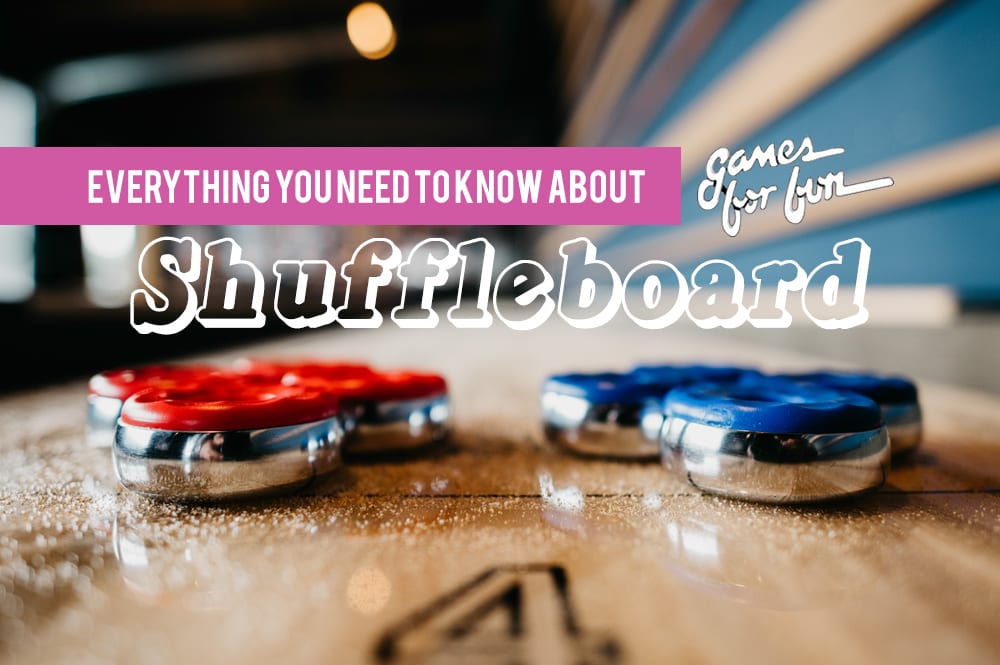
Everything you need to know about shuffleboard (almost everything)

From the history of shuffleboard to the rules of the game and beginner-friendly tips for success, learn just about everything you need to know about shuffleboard.

What started off as a popular 15th-century aristocratic pastime in England is now what we know as shuffleboard (also shovegroat, slide-groat, and shovel-penny). In this game, disks are shoved by hand or with an implement so that they come to a stop on or within a scoring area marked on the board or court (on a table, floor, or outdoor hard surface such as concrete).

 Shove-ha’penny, a later version of shovel-penny, is played when a coin or disk is pushed along a polished board so that it stops between closely ruled lines. This version is still a popular game in English pubs and, hey, if you’re reading from the States, maybe you could make it popular here!

But, how did the game shuffle it’s way into America in the first place? Well, shuffleboard was introduced to Daytona Beach, Florida in about 1913 as a game on land. The game was so popular that it spread rapidly through the United States, particularly in retirement communities, with each community devising various rules of play. The modern form of shuffleboard was defined at St. Petersburg, Florida, in 1924 — the same place that the National Shuffleboard Association was founded seven years later in 1931.

 This society adopted the “official” rules of the game, also later defining the size and shape of courts (concrete or terrazzo, 6 by 52 feet [1.8 by 15.8 metres]); the maximum length of the cues (6 feet 3 inches [190.5 cm]); the disks (either wood or composition, 1 by 6 inches [2.5 by 15 cm]; four red, four black); and methods of play and scoring.

 Fun shuffleboard fact: In modern times, a modified form of the old indoor game became popular among travelers on ocean liners and cruise ships as a deck game. For the shipboard version, called shuffleboard, courts of various designs were marked on the deck, with lined sections at either end, numbered 1 to 10; the section nearest the player, called 10 off, reduced scores by 10.

Equipment Used and Present-day Game Rules

Here’s the rundown: The object of a regular shuffleboard is to slide, by hand, all four of your shuffleboard weights alternately against those of your opponents to the highest scoring area without the weights falling off the end of the shuffleboard into the alley. Only the winner receives a score. 

To be the winner, your weight (or weights) must be further down the board than your opponent’s. You can achieve this by knocking off your opponent’s weight (or weights) or by outdistancing them on the board. The Hammer is the last shot in the frame (or round). The person or team who has the Hammer in any given frame is considered to be on the defensive. In other words, it is an advantage to shoot last. 

Shuffleboard may be played by two people (singles) or four (doubles), shooting alternately with red and black disks. Game may be 50, 75, or 100 points, as players desire. To count, disks must be entirely within scoring sections, clearing all lines. In match play (best two out of three games), the second game is started with a black disk.

Tip: A dead disk is one which stops in the area between far deadline and starting area or is one remaining on the court after having struck any object other than a live disk. Remove dead disks from play. If a dead disk moves or displaces a live disk, play that half round over.

  • Playing Singles

In singles, when eight shots have been made, players move to the opposite end of the court. Start a two-person game by standing, with your opponent, at the same end of the shuffleboard. Toss a coin – or use another method you prefer – to see who will shoot the first Weight and the color of the Weight. Each player will play with 4 Weights, of the same color.

The winner of the toss should slide their first Weight toward the opposite end of the board, the Scoring End. Their opponent then shoots their first Weight in a similar manner, attempting to either knock off the other player’s first Weight, or to outdistance it. Both players should continue shooting their Weights alternately, until all eight Weights have been shuffled. This action completes one round of play.

  • Playing Doubles

In doubles, team players remain at the ends they occupy at the beginning of the game, though the play alternates as in singles.

With four players, split into teams of two players each. Place one player from each team at the opposite end of the board. Like a two-player game, toss a coin or use another method to determine who will shoot first and the color of the Weights. Then each team should designate who will shoot the first round. 

These two players will shoot each of their four Weights alternately, until all eight Weights have been shuffled. Their actions conclude one round of play. 

The winner of the round is the team player whose leading Weight is the farthest down the board. Their score is then totaled and registered on the scoreboard. 

The team players at the opposite end of the board, where the Weights are now resting, clear the board and begin another round of play from their end – in exactly the same manner as the first round. The partner of the previous round’s winner shoots the first Weight. The game continues as many rounds as necessary, until one team score a total of 21 points.

Beginner-Friendly Tips to Improve Your Shuffleboard Skills

Be a knock-off. If you knock off each of your opponent’s shuffleboard weights after each shot, they won’t be able get any points. By attacking your opponent’s weights you are increasing the chance that you will knock all their weights off the board. Manage to leave one of your pucks on the shuffleboard table and you will win the round by (almost) default after successfully grinding out your opponent in this super defensive strategy.

Be in your corner. Since the highest-scoring part of the board is at the end, you will want to send as many weights into this zone as possible. However, another gameplay method involves placing two of your shuffleboard weights on the far corners of the board. You should especially try this if you shoot first and if your opponent does not knock your weight off. Having weights at each corner of the board makes it difficult for your opponent to remove both of your weights from scoring position.

Check out more shuffleboard treats below, and for more tips and tricks on how to win in shuffleboard, check out this article.

SOURCES:

Categories
Fun

Classic Games With a Twist: 3 family-friendly classic games to play at home…with a unique twist (part II)

family-friendly classic games family-friendly classic games family-friendly classic games family-friendly classic games family-friendly classic games family-friendly classic games family-friendly classic games

family-friendly classic games to play at homeIn part one of this blog, we talked about curing AHB (at-home boredom) by adding a twist to popular games that are typically played at home. As if it wasn’t enough to play Korean-style billiards, multiball foosball, or ping pong (after hours) with ‘lots of cups and ‘lots of beer — this blog will give more options for the family to brighten up that home game room.

We said it in part one, and we’ll say it again: Don’t fear...Games For Fun is here to help bring you a roomful of entertainment in your time of need! Let’s take a look at what we could do with a traditional air hockey table, shuffleboard, and darts. Our goal is to take entertainment to the next level by using the same old games and changing up one or two rules.

This 3-in-1 air hockey variation is bound to get kids and adults alike moving with a lot of laughs and fun competition

Imagine this game of air hockey: Two against two…with blindfolds…and two pucks instead of one. In this variation highlighted in this article, players integrate three different obstacles for the optimal air hockey rumble. Typically, one player squares off against one opponent in air hockey, but adding partners to the mix can make the action even more intense. This variation on the game is also ideal if you have a lot of people visiting your home and wanting to play the game since it allows twice as many people to play one game. This could be fun, especially if the pairs are mixed as adults vs. children or guys vs. girls, etc.

Now, when it comes to the blindfold aspect, perhaps eyesight isn’t always necessary. So we welcome the blindfolds! This variation can be funny for the players themselves and downright hilarious for those watching. Take a pair of old neckties or other pieces of material and blindfold each of the players. Now you have a total of four players, each blindfolded, trying to make a goal. How much more entertaining can this get? A lot. Just think about what happens when you add in another puck.

Air hockey tables usually come with multiple pucks, so all you’ll need to do is toss another one onto the table as the game begins. This variation also works well when there are many people awaiting their turn. Using two pucks can often lead to more goals, a game to five or 10 points will often end quicker than a game with just one puck — and this allows the players to take a break while a pair of other people get a chance. Of course, though, when there are blindfolds included, the game might take longer. Regardless, this triple threat variation will definitely build a group of spectators who won’t be able to resist laughing!

Shuffling into some at-home fun, one weight at a time…

Tap and Draw is a great Shuffleboard game for beginners. The game can be played one-on-one or in teams. Players will take turns shuffling weights to the opposite end of the table. In this game, they must avoid knocking other player’s weights off the table to avoid penalties. The game ends when one player reaches 51 points and the frame ends. If the first team/player to reach 51 points reaches those points at the end of the frame, the game is over. If the other team has not played in the frame, they will play, and the team with the highest score wins. When playing the game one-on-one each player will shuffle all 8 weights. When playing in teams of 2, each player will shuffle 4 weights (of the same color), for teams of four, each player will shuffle 2 weights. For each frame, scoring will begin when a weight lands in a 3-pt zone and no weights behind the foul line.

If you want to use your shuffleboard table in the opposite way of what was presented above, consider Target Shuffleboard. This is a lot like regular table shuffleboard, except players are allowed to knock off their opponent’s weight; the area in which their weight rests determines their points. This game can be played one-on-one or in teams. Each team uses one color of weights (red or blue) and the game is played in frames until one team reaches 51 points. Scoring doesn’t begin until a weight rests on a 3-pt target or higher.

For more fun shuffleboard variations, check out this article. There are approximately 15 shuffleboard variations, including the two listed here. With variations from Canada’s Canadian Shuffleboard to Dutch’s Sjoelen to Britain’s Shove Ha’penny to Ancient Greece’s Quoits, your shuffleboard can get new recognition.

Keep the good times going with this clock-inspired dart variation, “Around the World”

According to this article, this game is super beginner-friendly (also meaning that children can take a stab at this one, too). Considered to be one of the simplest games you can play with a dartboard, you don’t even have to keep score. This is a great option if you just want to get a quick game in. To win the game, you must hit numbers sequentially until you reach 20. So, you’d start out by aiming for the 1 block. When you hit it, you move onto the 2 block. This continues until someone wins the game by hitting 20.

Players get 3 shots each. Double and triple rings can be used to your advantage. If you hit a double, you get to skip the next number. If you hit a triple, you get to skip the next 2. For example, if you hit a triple 1 during your first round, your next goal would be to hit a 4. Any shots that land outside of the number you’re currently on do not count for anything. You can also add the bullseye as the final game-winning shot if you want to make things more difficult.

If you want to try any of these game ideas out, or are simply looking to buy a new game room table, contact Games For Fun for all your fun at-home entertainment

Looking for more ideas on how to keep having fun at home this holiday season? Be sure to check out the articles below:

Categories
Ping Pong

Upcycling your ping pong table: Different games to play on a ping pong table (that isn’t ping pong)

Welcome the 2021 year with this unique list of alternative ping pong table games

Different games to play on a ping pong tableThere’s no surprise that this year is prompting people to look for new ways to use old things, including using your ping pong table to play games that aren’t ping pong. Why are people into doing these sorts of things — DIYing and upcycling? One word: quarantine. The reality is that being at home isn’t the easiest way to keep people busy. In fact, at home boredom is sort of a thing we’ve coined over here at Games For Fun in recent months. If you haven’t read about AHB, don’t worry. You could read about the pandemic’s creation of extreme AHB here, here, and here.

Now, don’t you think you’ve given your ping pong table enough of a break? If you need to figure out what to do with your ping pong game room table that’s been sitting in your game room collecting dust for the last few months, keep reading. If you need to figure out what to do with what seems to be too much time on your hands, keep reading.

While playing a game of ping pong on a ping pong table is a great way to pass the time, we’re all about creativity. We know that you could upcycle that table to be useful for more than just a game of ping pong. A lockdown can be an opportune time for you to find new ways to use old things, so, yes, your ping pong table can be converted into a non-ping pong game room table. Consider some fun options below.

Table Bowling

Set up small plastic bottles on one end of the ping pong table and use a larger ball, such as a tennis ball, to bowl down the length of the table. This can be made harder or easier, depending on how close the bottles are set up by each other as well as the weight of the ball that is used as the “bowling ball.

P-Pong, B-Ball

Play basketball on your pingpong table by taping two plastic or Styrofoam cups to opposite ends of the table. Take turns bouncing a ping pong ball across the table, aiming for the cup on the other end of the table. Prevent your opponent’s ball from entering the cup closest to you with a ping pong paddle or your hand. Score the game similarly to traditional basketball — or devise your own scoring system

Tied Up

Teams of two stand back to back and are tied together so that they are facing opposite directions. Every time a player hits the ball, then the team must turn 180 degrees so that the other player will hit the next ball. This constant back-and-forth motion can be overwhelming for some people, but it is a great way to add laughs to the game.

Ping-Pong-Blow

The Disney FamilyFun website suggests marking a goal on each end of the pingpong table with masking tape. Put a ping pong ball in the middle of the table and hand your opponent a drinking straw. Starting at “Go!,” attempt to blow the ping pong ball across the table using only the straw. Make it past your opponent’s line to earn a point. The first player to make it to the previously designated number of points wins. Each player has to try to keep his or her ball under control, and they aren’t allowed to touch the ball with their hands or straws while guiding it down the table. If the ball falls off of the table, then it must be put back on at the beginning. Players could also use cotton balls in place of ping pong balls and try to blow them.

Hockey Pong

Design a rectangular-shaped hockey rink on your ping pong using hardcover books or blocks for walls. Leave open spaces at both ends of the rink. Use an ice cream stick to volley a ball of paper into the opposite goal. You can use the sides and entire length of the table to attempt to gain possession of the puck and score a goal — just be careful not to knock over the books or blocks in all the excitement.

Dinosaur Arms Ping Pong

Hey, no hate on the dinosaurs here! But this is an entertaining game to watch. This fun game uses all of the rules of regular ping pong, but players must pretend that they have tiny dinosaur arms while playing. Instead of being able to stretch out their arms to hit the ball, players keep their elbows bent and their arms tucked in close to their body. If this game is too difficult, then it is a good idea to play with 2 people on a team to help provide more coverage.

Double Trouble

In this fun game, players each have two paddles – one in each hand. They use their paddles to hit and return ping pong balls as normal, but they must not cross their bodies with a hand, which means that they have to use the paddle on each side of their body. This game is really difficult for players who have a weak non-dominant hand and can result in balls being hit all over the room.

Sharp Shooting

Cut five different-sized holes into the side of a box. Label each hole with a corresponding value — for example, a smaller-sized hole can be labeled with a high score, such as 500. Set the box at one end of the pingpong table and use tape to designate a starting spot on the opposite end of the table. Using an ice cream stick, take turns rolling marbles toward the box, aiming for the highest numbered holes. The player with the highest score at the end of five tries wins.

Three-Legged Ping Pong

Teams of two players each tie one leg together, as in a three-legged race, to compete in this game. Each pair of players must work together to move back and forth to return the ball to their opponents. It’s only with open communication that players will be able to move together as a team without falling or running into each other.

Three-Legged Ping Pong

Teams of two players each tie one leg together, as in a three-legged race, to compete in this game. Each pair of players must work together to move back and forth to return the ball to their opponents. It’s only with open communication that players will be able to move together as a team without falling or running into each other.

Tag Ping Pong

This game combines ping pong with the fun elements of Tag!. One player is it and the other players take turns playing ping pong. When someone is tagged out, then he or she has to go to the ping pong table to play for a chance to get back into the game. If a player is then able to beat his or her opponent, then he or she can rejoin the game, while the loser must wait until a win to get back into the game.

For more information about ping pong, including games to play on a ping pong table and ping pong tips, check out the articles below: